Introduction
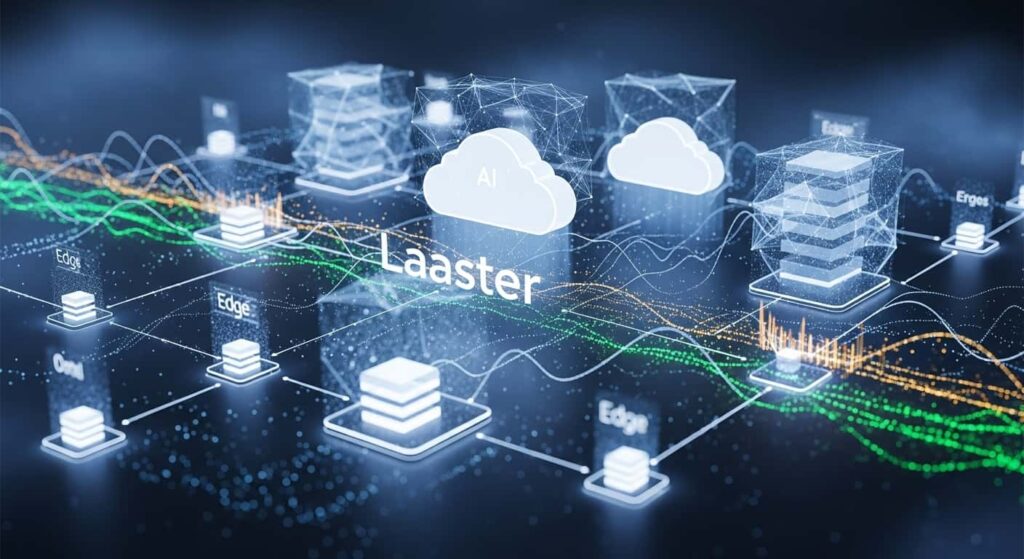
In today’s rapidly shifting digital world, the concept of laaster is gaining traction. It’s not merely a buzzword—it’s a framework, a system, and a mindset that companies and developers are increasingly adopting to build more responsive, agile, and future-ready platforms.
In this article, we’ll dive deep into laaster: what it means, how it works, why it matters, and how you (or your business) can put it to work.
What Is Laaster?

At its core, laaster refers to a technology design approach and operational philosophy aimed at creating systems that respond quickly, scale seamlessly, and adapt to changing demands in real time. In simpler terms: it helps digital products and services keep up with the speed of modern users and markets.
Key attributes include:
- Low latency — systems built with laaster minimize the delay between user action and system response.
- Real-time processing — data is processed and acted upon immediately, not with significant lag.
- Dynamic scaling — as demand grows or shrinks, a laaster-based system adjusts resources accordingly.
- Smart routing and architecture — the design ensures data and operations take optimal paths.
- A mindset of agility and endurance — laaster is not just about speed but also about building systems that can evolve over time.
While the term may feel new, this kind of thinking arises naturally when we ask: How can software feel instantaneous? How can systems be ready for tomorrow’s demands today?
Why Laaster Matters in Today’s Digital Landscape
1. Users expect speed
Users have little patience for delays. A delay of just one second in page load can significantly increase bounce rates. With laaster-inspired design, platforms respond in milliseconds, reducing friction and improving the user experience.
2. Real-time data drives value
From live chats to instant notifications to dynamic dashboards, many services now thrive on instant feedback. Laaster builds for that expectation rather than treating it as a luxury.
3. Scalability is table-stakes
Fluctuating demand (for example sales spikes, live events, or sudden user growth) means systems must scale. A laaster design anticipates scaling rather than reacting in crisis.
4. Competitive differentiation
Businesses that deliver faster, more reliable, more dynamic experiences can stand out. A commitment to laaster means fewer delays, fewer errors and a smoother journey.
5. Future-proofing
Technology changes fast. Systems built with laaster principles are more adaptable to new features, platforms, or business models.
Core Components of Laaster Systems
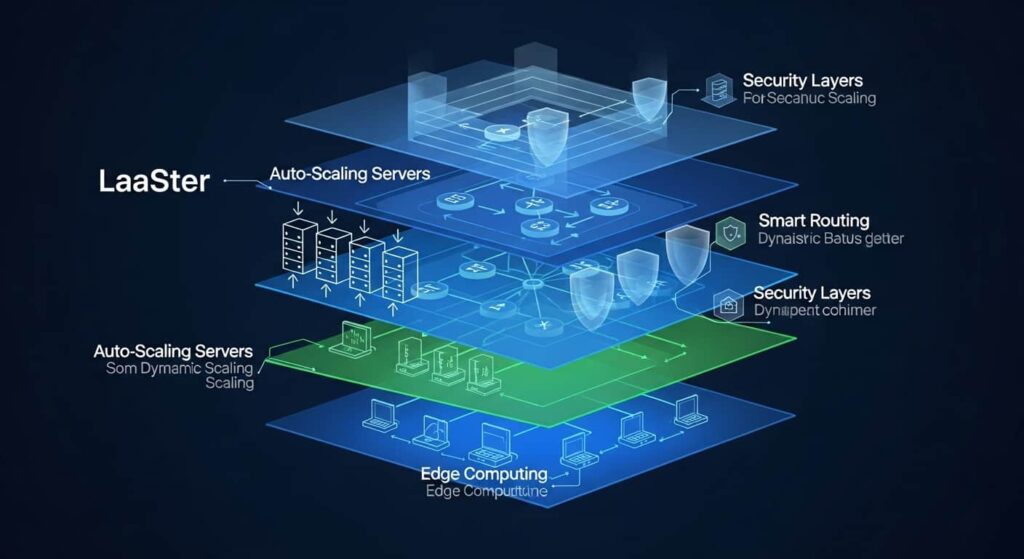
Here are the foundational elements you’ll likely find when a system is designed with laaster in mind:
- Low-latency architecture
- Optimised data retrieval and transfer paths.
- Minimised overhead in system calls and backend processing.
- Caching, edge computing, or content-delivery networks (CDNs) as enablers.
- Real-time processing and feedback loops
- Event-driven designs rather than batch updates.
- Immediate reflection of changes (user behaviour, data updates, system states).
- Useful for live messaging, monitoring dashboards and reaction-based interfaces.
- Auto-scaling and resource elasticity
- Infrastructure that scales up (and down) based on demand.
- Containerisation, micro-services and serverless approaches can assist.
- Ensures resources align with need rather than over-provisioning or under-performing.
- Smart routing and architecture
- Direct data flows rather than long, chained processing.
- Use of intelligent API gateways, routing logic and service meshes.
- Prioritising critical paths and throttling non-urgent tasks.
- Secure, resilient design
- Even with speed and adaptability, security cannot be overlooked.
- Encryption, access controls, fault-tolerance are built in.
- Systems survive not only demand spikes but also evolving threat landscapes.
- Monitoring and adaptive optimization
- Continuous measurement of performance, load, bottlenecks.
- Feedback into system design and resource use.
- Iterative improvement tied to laaster mindset.
Real-World Applications of Laaster
Here’s how laaster is showing up in practice across different industries:
E-commerce
When a retailer experiences a surge (flash sale, holiday event), a laaster-designed e-commerce platform handles spikes smoothly. Product pages load fast, inventories update in real-time, check-outs happen with minimal waits.
Gaming and streaming
Games — especially multiplayer or cloud-based — need low latency. Viewers streaming live events expect no buffer. Laaster systems deliver that responsiveness.
Enterprise dashboards and analytics
Business users want up-to-date data on performance, sales, operations. With laaster principles, dashboards reflect live data as it flows, not yesterday’s metrics.
Healthcare
In healthcare apps, patient data, real-time monitoring, emergency notifications all benefit from systems designed for minimal lag, high responsiveness.
Education and collaboration tools
With remote work, online learning and distributed teams, tools that update live, allow collaboration in real-time and scale instantly benefit from laaster architecture.
Benefits of Embracing Laaster
Adopting laaster design brings multiple advantages:
- Faster, smoother user experiences.
- Better handling of peaks in demand.
- Improved operational efficiency (less wait time, fewer bottlenecks).
- Scalability without system collapse.
- Ability to respond quickly to new business requirements.
- Competitive edge in markets where speed and reliability matter.
For example: businesses that shifted to more real-time systems reported improvement in user satisfaction and lower churn. While exact numbers vary, anecdotal reports suggest improvements in load times by 20–40 % and error rates dropping significantly.
Challenges and Things to Consider
Nothing worth doing is entirely without trade-offs. Implementing laaster brings its own set of challenges:
- Setup cost and complexity: Building a high-performance, low-latency system from scratch often requires significant investment in infrastructure and talent.
- Technical expertise: You will need specialists in systems architecture, real-time design, performance tuning.
- Maintenance and operations: Once live, these systems require active monitoring and optimization.
- Legacy system constraints: Many organisations have older codebases or infrastructures. Retrofitting laaster principles may be harder than building afresh.
- Security and compliance: Greater speed and connectivity need strong safeguards. If you push data and responses faster, risk surfaces can increase.
- Cost-effectiveness: While scaling dynamically is efficient, unless managed correctly you could end up with wasted resources.
Being aware of these challenges means you can plan accordingly, weigh benefits versus effort, and build a roadmap rather than trying to rip and replace everything at once.
How to Get Started with Laaster
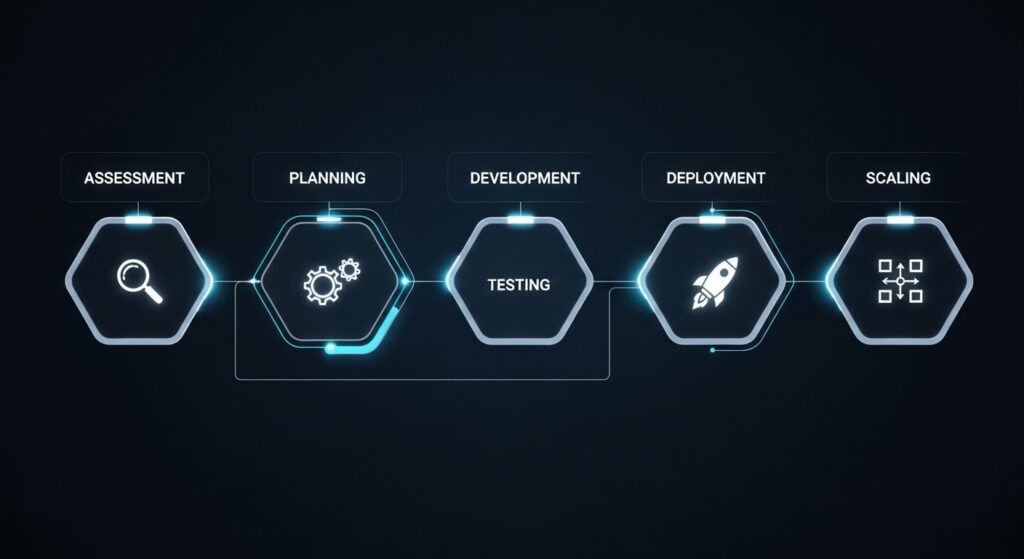
If you’re thinking: “I want to build a system or service with laaster in mind,” here’s a practical roadmap:
Step 1: Assess your current state
- Map out user journeys, identify where latency or delays occur.
- Review infrastructure, architecture, and bottlenecks.
- Ask: which parts of my service need real-time capability, and which can stay “normal”?
Step 2: Define the objectives
- What user experience improvements are you targeting?
- What load or growth scenarios do you need to cover?
- What metrics (response time, error rate, uptime) matter most?
Step 3: Architect for laaster
- Design system modules to handle low latency and real-time flows.
- Choose appropriate infrastructure (edge servers, micro-services, caching layers).
- Set up scalable resource mechanisms (auto-scaling, serverless, containers).
- Build intelligent routing and data flows.
Step 4: Implement incrementally
- Don’t try to convert everything at once. Start with critical paths.
- A pilot module could be a real-time data dashboard, or a high-traffic module.
- Monitor results and iterate.
Step 5: Monitor, measure, improve
- Use performance tools, track latency, throughput, error rates.
- Make resource tuning part of the process.
- Use feedback loops to keep optimizing.
Step 6: Scale and evolve
- Once initial modules are stable, expand laaster design across more of the service.
- Build the mindset of continuous improvement, adaptability and responsiveness.
What to Measure & Track
A laaster system is only as good as its metrics. Here are some key indicators:
- Response latency: Time from user action to system response.
- Throughput: Number of requests handled per unit time.
- Error rate: Failures, timeouts, dropped requests.
- Uptime/availability: Especially during peak loads.
- Resource utilisation: CPU, memory, network and how efficiently resources are used.
- Scaling effectiveness: How quickly and smoothly the system scales up and down.
- User-experience feedback: Surveys, behavioural signals (bounce rate, engagement).
Tracking these helps you know whether you’re truly achieving the goals of laaster.
Common Misconceptions About Laaster
- “Laaster means ultra-high cost always.” Not necessarily. While initial investment may be higher, efficient design and scalability can reduce long‐term costs.
- “It’s only for huge companies or enterprise scale.” While bigger players often lead, smaller organisations can adopt laaster principles in targeted modules.
- “Laaster means sacrificing security or stability for speed.” On the contrary, a well-designed laaster system emphasises responsiveness and resilience.
- “If I build it once, we’re done.” The mindset of laaster emphasises evolution. Systems change and what was fast yesterday may not be fast tomorrow.
The Future of Laaster: Where It’s Going

Looking ahead, a few trends point to how laaster will continue evolving:
- Greater integration of AI and machine learning — Real-time systems will increasingly use AI for decisioning, routing, optimization.
- Edge computing and distributed architectures — Processing closer to users to reduce latency.
- Increased modularity and micro-services — Each service fine-tuned for responsiveness.
- More serverless and event-driven systems — To handle bursts and dynamic workloads more elegantly.
- Ubiquitous real-time experiences — As users expect instant updating, collaboration, live features, laaster becomes baseline rather than premium.
- Sustainability and efficiency — Faster doesn’t have to mean wasteful. Future systems will aim for speed and responsible resource use.
If you’re building anything digital today — web app, mobile service, IoT ecosystem — thinking in laaster terms gives you a head start.
Realistic Example: A Retail Scenario
Let’s imagine a retail company launches a limited-time flash sale.
- At the outset, thousands of users flood the site to pick up deals.
- A system built with laaster principles ensures:
- Product listings load in under one second.
- Inventory syncs across global regions in real-time.
- Checkout completes smoothly even under heavy load.
- Customer-service chat offers live responses.
- After the sale, analytics reflect what sold, what didn’t, immediately, enabling next steps.
- Because the system scaled, no crash occurred, and users had a smooth experience — which translates into loyalty and positive brand perception.
That kind of scenario is no longer reserved for tech giants; with laaster design, it’s achievable for smaller companies too.
Conclusion
In a world where user expectations are rising, platforms that feel sluggish or outdated become liabilities. Embracing laaster is about future-proofing, delivering great experiences and building with agility in mind. Whether you’re a start-up, an established business or a developer building the next generation of tools — having laaster on your radar is an investment in quality, responsiveness and relevance.
Take the step today: map your system through a laaster lens, identify one key module to upgrade, and start realising the benefits of responsiveness and scalability. Because the next wave of digital platforms will not just manage change — they’ll thrive on it.