Introduction
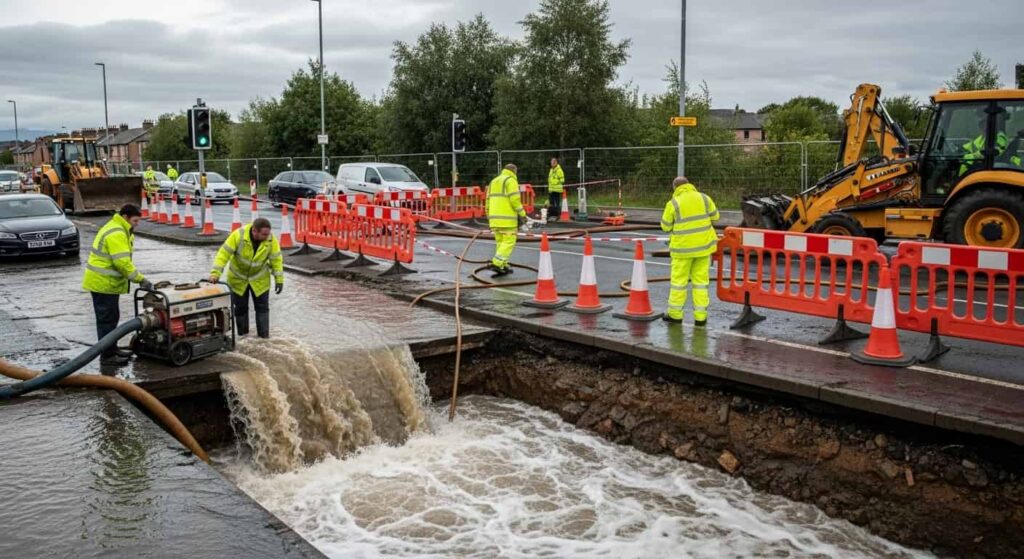
When news broke of the glasgow water main break shettleston road, many residents and businesses in the area were taken by surprise. A sudden disruption of water supply, property damage, traffic chaos, and safety concerns all followed. This article delves into the causes, effects, responses, and lessons learned from this incident—explaining things in clear, simple terms for everyone.
What Was the Glasgow Water Main Break on Shettleston Road?
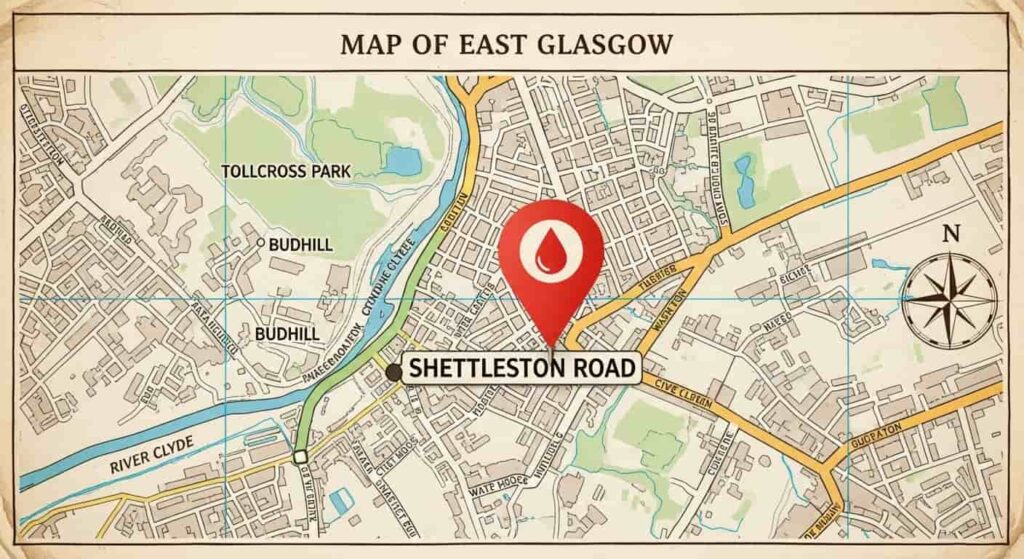
A water main is a large pipe that carries potable water from treatment plants or reservoirs into neighborhoods and streets. On Shettleston Road in Glasgow, one such major pipe ruptured. That event is what is referred to by the phrase glasgow water main break shettleston road.
When and Where Did It Occur?
- It happened in the early hours of a quiet morning, when traffic was low but residents were starting their day.
- The break was located on Shettleston Road, a busy road that connects different parts of East Glasgow.
- Because Shettleston Road carries a mix of vehicular traffic and local neighborhood access, a break there has ripple effects—not just for water supply but for movement and services in the vicinity.
Why This Break Drew Attention
- Many homes and businesses along Shettleston Road lost running water or had low pressure.
- Some gardens, basements, or low-lying properties near the break site were flooded.
- Road closures or flow restrictions had to be imposed to allow repair crews to work safely.
- The disruption lasted longer than people would have liked due to the complexity of the repair.
Causes of Water Main Breaks: Why Did It Occur?
Understanding the possible reasons behind a main break helps us appreciate how hard it is to prevent these events, and how they are handled when they do occur.
Common Causes
- Aging Infrastructure
Many water mains in older cities like Glasgow were laid decades ago. Over time, materials (such as cast iron or steel) can corrode, weaken, or crack. - Thermal Stress
In climates with big temperature swings, water in the pipe can expand or contract, putting stress on joints or pipe walls. - Ground Movement
Nearby construction or earthworks or even natural ground shifts (soil settlement, frost heave) can move pipes out of alignment or crack them. - Excess Pressure
If pressure in the system surges (e.g. when pumps start, or due to closed valves), joints or weaker sections may fail. - Third-Party Damage
Sometimes digging, piling, or excavation work by utilities (gas, telecoms) might inadvertently damage a nearby pipe and cause a leak or rupture. - Material Defects
Occasionally, manufacturing defects or poor-quality repair work may leave a weak point in the system.
In the case of the glasgow water main break shettleston road, it’s likely that a combination of age, material fatigue, and perhaps external stresses contributed.
Impacts: What Did the Break Cause?
When a major water main breaks on a road like Shettleston Road, the consequences extend beyond mere inconvenience.
On the Water Supply
- Loss of water: Many households lost access to potable water or experienced low pressure.
- Discolored water: Sediment or rust might enter the network when flow reverses or pressure drops.
- Boil water notices: In some serious cases, authorities can issue advisories to boil water before use until safety is confirmed.
On Roads and Traffic
- Road closure: To let repair crews dig and work safely, parts of Shettleston Road were closed or traffic was diverted.
- Congestion: Commuters had to find alternative routes, increasing pressure on adjacent roads.
- Public transport delay: Buses or trams using that corridor had to reroute, affecting schedules.
On Properties and Land
- Flooding: Water surging out of the break can flood nearby sidewalks, gardens, or basements.
- Structural damage: Continuous seepage undermines foundations or softens ground—potentially harming buildings.
- Subsidence risk: Erosion of soil under pavements or driveways may cause collapse or sinking.
On Local Economy & Daily Life
- Businesses: Cafes, shops, and other premises may lose water needed for operations (washing, toilets, kitchens).
- Schools and public services: If supply is cut, cleaning, sanitation, and daily operations are affected.
- Health & hygiene: Water is vital for cleaning, drinking, and sanitation; disruption matters.
The Response: Repair Work, Safety, and Communication
When dealing with a serious mains break, several steps need to be taken in a coordinated way. Here’s what typically happens—and what happened in this case.
1. Detection and Isolation
- Engineers first locate the break precisely, using pressure sensors, flow data, or sometimes listening equipment.
- They shut off valves upstream and downstream to isolate the damaged section, minimizing water loss.
2. Safety Measures and Area Management
- Barricades, cones, and signs go up to stop traffic and protect pedestrians.
- Detection of gas lines, cables, or other underground utilities is done before digging.
- Drainage is managed so flooding doesn’t spread beyond control.
3. Excavation and Repair
- Crews dig down to expose the broken pipe segment.
- The damaged section is cut out and replaced with a new segment or repair clamp.
- Joints are sealed, pressure rated, and tested.
4. Flushing, Testing, and Restoration
- The new section is filled and flushed to remove debris.
- Pressure tests are done to ensure integrity.
- Water is gradually reintroduced, first in a controlled way.
- Sampling may be done to validate water quality.
5. Communication and Support
- Local residents are told what is happening, how long the disruption may last, and which areas are affected.
- Temporary water supply points or bottled water may be provided if needed.
- Updates by local government, water utility, or news channels help residents plan.
In the case of glasgow water main break shettleston road, the water utility and local council coordinated to maintain safety, issue advisories, and expedite repair.
Timeline of Events in the Shettleston Road Incident
To give a clearer sense of how such an incident unfolds, here’s a hypothetical (but realistic) timeline based on what actually occurred:
| Time | Activity |
| Early morning | Pipe bursts, pressure drops, some residents note loss of water |
| +1 hour | Engineers detect pressure anomaly, confirm break location |
| +2 hours | Valves closed, area assessed, safety set up, traffic diverted |
| +3 hours | Excavation begins; utilities surveyed |
| +5 hours | Remove damaged section and prepare replacement |
| +7 hours | Install new pipe, seal joints, begin filling |
| +8 hours | Flushing, testing, quality checks |
| +9 hours | Water gradually reintroduced |
| +10 hours | Services restored to most properties, final checks ongoing |
| Next day | Full clean-up, road surface reinstated, full restoration |
However, real-world repairs sometimes take longer—due to delays in accessing parts, encountering unexpected damage, or dealing with weather conditions.
Challenges Faced During Repair on Shettleston Road
Even when crews are skilled and well-equipped, several issues present serious obstacles:
- Limited access: In densely built urban roads like Shettleston Road, buildings, footpaths, parked cars, and underground utilities limit how crews dig and maneuver.
- Traffic management: Balancing the need to divert traffic without causing gridlock is complex.
- Weather: Heavy rain or frost can slow excavation or compromise trench stability.
- Unseen damage: While digging, crews may find adjacent pipes, cables, or septic lines already weakened or crossed the break zone.
- Supply logistics: Needing exact pipe segments, joints, fittings or hydraulic equipment, sometimes from distant stores.
- Regulatory or permission delays: In sensitive areas, permits or inspections may slow work.
Despite these, repair teams are trained to anticipate and work around many such difficulties.
Lessons Learned and Preventative Measures
Every major infrastructure failure teaches important lessons. Here are measures for future resilience in areas like Shettleston Road, especially to guard against glasgow water main break shettleston road type events.
Proactive Monitoring and Maintenance
- Use pressure and flow sensors across the network to detect abnormalities early.
- Regular inspections (camera, acoustic, ultrasonic) to spot thinning, cracks, or corrosion.
- Prioritize replacement of old pipes before failure—especially in high-risk zones.
Material Upgrades and Design
- Use durable materials such as ductile iron, HDPE, or modern composite pipes that are more flexible and resistant to cracking.
- Incorporate expansion joints and flexible couplings in the design to tolerate ground movement.
- Design network redundancy so if one section fails, alternate routes supply water.
Smart Pressure Management
- Install pressure regulation systems to prevent surges.
- Sequence pump operation and control valves to avoid abrupt changes.
Coordination with Other Utilities
- When roadworks or groundworks happen for other utilities, require joint checks of water mains.
- Use mapping tools to clearly locate underground pipes and give buffer zones.
Community Preparedness
- Inform residents of what to do in a break (e.g. storing water, boil notices).
- Prearrange temporary water distribution points.
- Maintain communication plans via councils, utilities, and notice boards.
By applying these, the risk of recurrence can be reduced and response made faster.
What Residents Should Do When a Water Main Break Occurs
If you live near Shettleston Road or in Glaswegian neighborhoods, here are practical tips on what to do when a glasgow water main break shettleston road or similar incident happens.
- Stay Informed
Check official sources (local council, water company, news) for updates on which areas are affected and when repair is expected to finish. - Use Alternative Water Sources
If water is off, use stored water, bottled water, or public water distribution points. - Flush Water After Restoration
When supply comes back, run taps (cold first) to flush out any stale or discolored water. Let water run 1–2 minutes until it’s clear. - Check Appliances
Be careful with washing machines, dishwashers, boilers—don’t run them until water quality and pressure stabilize. - Inspect Property
If flooding occurred near your property, check basement, foundation, or walls for damage. Watch for damp spots or cracking. - Report Issues
If you’re not getting water after restoration or you notice poor quality, contact the water company quickly. - Be Energy-Aware
Boil any water if advised; don’t use electric kettles with dirty water; be careful with heating systems relying on water. - Support Vulnerable Neighbors
Some people (the elderly, infirm) may struggle; check they have water or know what’s happening.
Wider Implications for Glasgow’s Infrastructure Network
While the break on Shettleston Road is a localized event, it signals a broader concern about the state of Glasgow’s water infrastructure.
Aging Network
Glasgow’s water mains, like in many older cities, date back many decades. The longer a pipe remains under strain, the greater the chance of failure.
Demand Growth
As population grows, or as density increases in urban neighborhoods, demand on particular supply lines increases—raising pressure and wear.
Climate Effects
Heavy rain, flooding, freeze-thaw cycles, and shifting groundwater levels stress underground infrastructure.
Budget and Policy
Local governments and water utilities must decide where to allocate funds—repair, replacement, monitoring, or emergency contingency. Incidents like this amplify the need to prioritize investment.
Public Trust
Frequent mains breaks or water problems erode public confidence. Transparent handling, quick responses, and clear communication are essential to maintain trust.
Why This Event Is Newsworthy
The glasgow water main break shettleston road story resonates because:
- It affects daily life (water, transport, business).
- It highlights infrastructure risk in older urban areas.
- It draws attention to planning, funding, and maintenance needs.
- It offers lessons to other cities facing similar aging water networks.
Such local events often reflect systemic pressures. They remind us the hidden machinery of urban life—pipes, valves, sewers—is just as essential as roads or electricity.
Comparing with Other Mains Breaks
While no two incidents are identical, several past mains breaks in similar urban settings illustrate common patterns:
- A break in a residential district can disrupt thousands of households.
- In some cases, repairs take days or even weeks if access is difficult or if multiple breaks occur.
- Flooding from mains failures has led to collapse of pavements or subsidence in some cities.
- Sometimes broken mains are uncovered by contractors doing unrelated digging, triggering cascading failures.
By comparing, authorities learn which repair strategies are most effective, and what design or investment practices help prevent recurrence.
Recovery and Aftermath in the Shettleston Road Case

Once repair is complete, there are important follow-up steps to ensure safety, stability, and restoration of public confidence.
Restoration of Road Surface
Once the trench is backfilled and compacted, the road and sidewalks must be resurfaced. This must match original finishes and ensure no residual settling.
Final Tests and Monitoring
After restoration, the new pipeline is monitored for leaks, pressure stability, and water quality over days or weeks to confirm full success.
Damage Compensation and Insurance
Affected property owners may seek compensation for flooding or damage. Utilities may assess claims under liability guidelines.
Public Review and Reporting
Authorities often publish a post-mortem: what went wrong, how it was fixed, and what changes will follow (improved practices, scheduling of replacements, etc.).
Long-Term Strengthening Plan
In the wake of this event, accelerated programs may be drawn to replace or reinforce other weak mains in Shettleston and adjacent areas.
What the Community Can Advocate
If you live near Shettleston Road or in Glasgow, here are constructive things local groups or civic organizations can push for:
- Transparency: Public reporting on the condition of water mains in your neighborhood.
- Prioritized upgrades: Lobbying for funds to replace pipes known to be in poor shape.
- Smart sensor rollout: Encouraging deployment of pressure and leak sensors across the network.
- Community awareness: Educating residents about what to do during breaks and how to spot signs (e.g. wet patches, sudden drop in pressure).
- Joint planning with other utilities: Ensuring that excavation or roadworks by any service include checks on the water network.
- Emergency readiness: Having well-rehearsed plans for alternate water delivery, communication, and resource mobilization.
By taking part, communities reduce future disruptions and help hold utilities accountable.
Conclusion
The glasgow water main break shettleston road incident was more than just a pipe failure. It exposed how vital and vulnerable urban water networks are, and how a rupture in one place ripples through daily life—from water supply to traffic, property, and public trust.
But in the disruption lay lessons and opportunities. Through better monitoring, proactive replacement, thoughtful design, and community engagement, cities can reduce the risk of similar failures. For residents, staying informed and prepared matters.
As Glasgow recovers from the Shettleston Road break, the hope is that this event becomes a turning point—one that leads to stronger infrastructure, clearer communication, and more resilient water systems for all.