
Introduction
In today’s fast-moving world, new words emerge to describe evolving ideas and approaches. One such term gaining traction—though still little-known—is stormuring. If you haven’t heard of it yet, you’re not alone. In this article, we’ll dive deep into what stormuring is, how it works in practice, why it’s becoming increasingly important, and how you might apply it in your own work or business.
What Is Stormuring?

Stormuring is a portmanteau blending “storm” and “ensuring,” although it also borrows a sense from “brainstorming” and “sustaining.” At its core, stormuring refers to the process of continuously generating, refining, and fortifying ideas or initiatives, especially in turbulent or rapidly changing environments.
Think of stormuring as the art of weathering storms—whether literal or metaphorical—through innovation, foresight, and adaptability. It’s not just coming up with a burst of ideas; it’s maintaining momentum, adapting in real time, and ensuring resilience over time.
Key Characteristics of Stormuring
Here are a few hallmarks that help distinguish stormuring:
- Iterative Idea Development: It’s not a one-off brainstorm. In stormuring, ideas evolve through cycles.
- Adaptive Response: The process incorporates feedback and changing conditions.
- Sustained Momentum: Rather than a single flash of insight, stormuring focuses on long-term continuity.
- Risk Anticipation: It anticipates obstacles as part of the process, weaving in contingency thinking.
- Collective Engagement: Stormuring often involves teams, drawing from diverse perspectives.
Why Does Stormuring Matter Now?
As times grow more volatile—economically, socially, environmentally—the ability to pivot and adapt becomes a key asset. Stormuring answers that need head-on.
Navigating Volatility
In unstable settings, a static plan often fails. Businesses, communities, and leaders need a mode of thinking that accounts for flux. Stormuring is designed for instability, not calm seas.
Driving Innovation
New solutions rarely emerge fully formed. Stormuring encourages an environment where ideas can be safe to test, adapt, and potentially fail—and then reemerge stronger.
Building Resilience
Stormuring ensures that as conditions shift, the core idea or project doesn’t collapse. The approach embeds resilience into the evolution of ideas.
How Stormuring Works in Practice
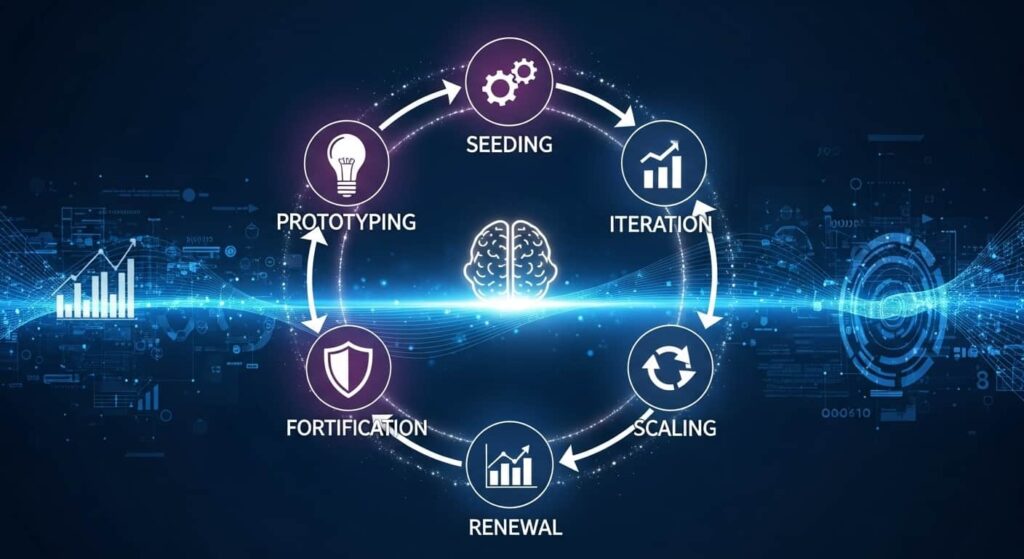
Let’s look at how someone might practice stormuring in real-world contexts—whether in business, community work, or creative projects.
Phase 1: Seeding the Core Idea
- Start with a broad, flexible concept—not too rigid.
- Gather a small group of diverse minds to brainstorm initial directions.
- Encourage open thinking and suspend judgment early.
Phase 2: Rapid Prototyping & Feedback
- Build small versions or test cases of ideas.
- Expose them to real-world conditions or to a test audience.
- Collect feedback and detect failure modes early.
Phase 3: Adaptive Iterations
- Use feedback to adjust direction.
- Make small course corrections, not massive overhauls.
- Keep core vision intact while adapting details.
Phase 4: Fortification
- Identify weak spots in the idea or system.
- Add redundancy, backup options, or diversification.
- Plan for stress conditions and worst-case scenarios.
Phase 5: Scaling Mindfully
- Once more stable, expand reach or scale operations.
- Monitor signs of stress or deviation.
- Maintain flexibility even as you scale.
Phase 6: Renewal & Reinvention
- Periodically revisit assumptions.
- Be ready to discard or reinvent parts when conditions change.
- Avoid complacency.
These phases aren’t always linear. Often, a team may cycle back from fortification to iteration if circumstances force it.
Examples of Stormuring in Action
Here are a few illustrative (though hypothetical) examples to make stormuring more concrete.
Small Start-Up Facing Market Shift
A tech start-up launches a niche app. Soon, a new regulation emerges that alters market demand. Instead of abandoning the project, the team uses stormuring:
- They prototype alternative features that comply with the regulation.
- They test quickly, receive feedback, and swap out underperforming elements.
- They build backup services or alternative monetization strategies.
- Over time, they emerge with a resilient product suite that weathers regulatory change.
Community Project in Environmental Planning
A local community launches a sustainability initiative around water usage. Climate patterns shift, and droughts intensify. The organizers adapt using stormuring:
- They trial alternative water-saving methods across neighborhoods.
- They watch outcomes closely and redirect resources to what works.
- They develop contingency plans for worst-case drought.
- The project persists and scales into related areas (like energy or waste).
Creative Agency Pivoting During Crisis
An advertising or design agency loses some major clients due to economic downturn. Using stormuring:
- The agency experiments with new service niches (e.g. digital content, social media packages).
- They pilot offerings with small clients, test pricing, refine delivery approach.
- At the same time, they build passive income streams (templates, courses).
- They maintain cash buffers and diversify client base.
- Over time, the agency stabilizes under its new model.
Benefits of Embracing Stormuring
Why go through all this effort? Because stormuring brings several benefits not found in rigid planning.
- Greater Adaptability
In a stormuring mindset, change is expected—not feared. That mindset shift reduces panic and paralysis. - Sustained Innovation
It fosters continuous evolution, so your ideas never stagnate. - Risk Mitigation Built-In
Since stormuring anticipates failure points, you’re less likely to be blindsided. - Resilience in Hard Times
You craft structures that endure stress, rather than collapsing at the first shock. - Inclusive and Collective Growth
By engaging diverse inputs and feedback loops, you benefit from different perspectives. - Long-Term Relevance
Instead of becoming obsolete, your initiatives stay aligned with trends and needs.
Challenges and Pitfalls of Stormuring
No approach is perfect. Here are challenges you must watch out for if you adopt stormuring.
Over-Iteration Without Focus
Drifting aimlessly through endless tweaks can dilute core purpose. If you never commit, you never deliver.
Burnout
Constant adaptation demands energy. Teams can exhaust themselves trying to keep pace without pause.
Analysis Paralysis
Too much feedback and data can lead to halting decisions. Stormuring must balance adaptation with decisive action.
Loss of Direction
Without a guiding anchor (vision, mission), stormuring can devolve into chaos.
Resource Constraints
Smaller organizations may lack the time, capital, or flexibility to iterate rapidly under this model.
Best Practices for Stormuring Successfully
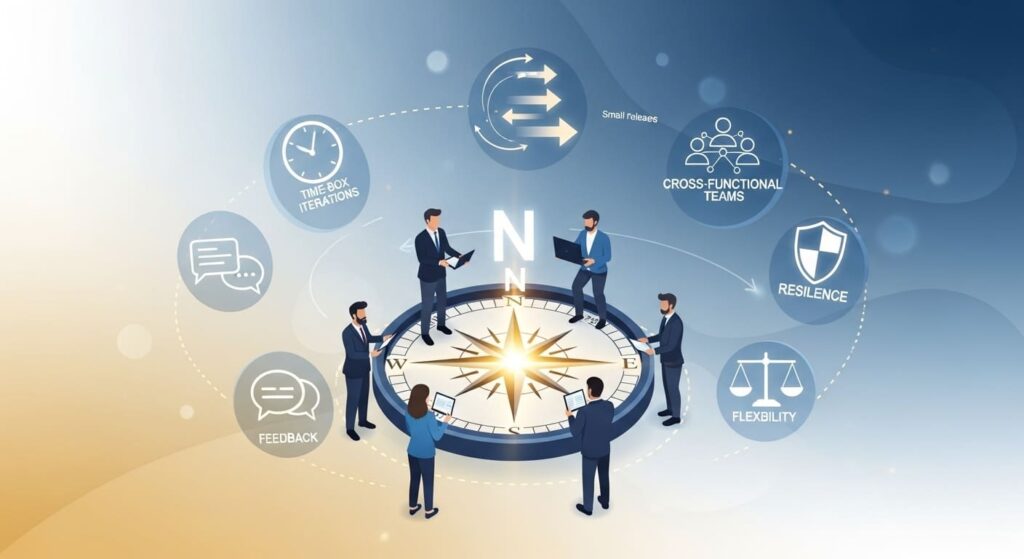
To make stormuring work well, here are some guiding principles—woven into your process rather than imposed after the fact.
- Define a Flexible North Star
Have a central purpose or vision that guides adaptations but does not lock you into rigid details. - Time-Box Iterations
Give each cycle a deadline to prevent endless tinkering. - Small, Frequent Releases
Rather than big launches, prefer incremental improvements. - Empower Cross-Functional Teams
Bring together diverse skills—technology, marketing, operations—to iterate from multiple angles. - Use Feedback Channels Early
Engage users, clients, or stakeholders frequently and systematically. - Reserve Slack Resources
Keep buffer time, budget, or personnel so you can pivot when needed. - Reflect and Pause
Create moments to step back and evaluate whether you’re still aligned with your vision. - Balance Persistence with Flexibility
Know when to double down and when to abandon a failing path.
When to Use Stormuring—and When Not To
Stormuring is powerful, but it’s not always the right fit. Here’s a guide to choosing wisely.
Ideal Situations for Stormuring
- High uncertainty environments (markets shifting, regulation changes, crises).
- Projects that require innovation.
- Initiatives with room to evolve over time.
- Small- to medium-scale ventures where adaptability is a competitive edge.
Less Suitable Situations
- Projects with rigid, unchangeable requirements (e.g. legal compliance mandates with no flexibility).
- Highly resource-constrained contexts where iteration costs are too high.
- Environments with zero tolerance for failure or experimentation.
- When you’re in a maturity phase and need stability more than innovation.
Stormuring vs Traditional Planning
To better understand the concept, it helps to contrast stormuring with more conventional planning styles.
| Aspect | Traditional Planning | Stormuring |
| Approach | Predict, commit, execute | Iterate, adapt, evolve |
| Risk Handling | Avoid, buffer | Expect, incorporate |
| Flexibility | Low | High |
| Timing | Longer upfront planning, slower changes | Rapid cycles, frequent change |
| Stability | Emphasis on consistency | Emphasis on resilience |
| Decision Speed | Slower, deliberate | Faster, adaptive |
| Feedback Sensitivity | Lower | High |
Traditional planning assumes a relatively stable environment. Stormuring assumes change is inevitable.
Stormuring in Action: A Hypothetical Case Study
Imagine GreenLink, a start-up promoting eco-friendly home systems (like smart thermostats, solar modules). They launch their first product, but after six months, new tariffs on solar imports and shifts in consumer energy trends begin to erode their market.
Here’s how GreenLink might apply stormuring:
- Pivot Seed
They expand into energy-efficiency consulting, not just hardware sales. - Rapid Prototypes
They launch a minimal consulting package in one region and measure uptake. - Feedback & Adaptation
Customers say they prefer subscription-based models. GreenLink alters its offering accordingly. - Fortify
They create a hybrid model: hardware + subscription service + consulting. - Scale with Guardrails
As they expand to new cities, they funnel results carefully, monitor risks, and withhold over-expansion. - Renew
After several years, they revisit the core assumptions, explore new verticals (e.g. smart water systems), and keep evolving.
Through this stormuring approach, GreenLink weathers regulatory tariffs, shifting demand, and competitive pressure—without crashing.
Measuring Success in Stormuring
How do you know if your stormuring is working? Because it’s fluid, measuring success requires tracking dynamic indicators.
Leading Indicators
- Number of new iterations tested
- Speed of response to feedback
- Rate of drop-offs or failures in experiments
- Engagement levels with pilot users
Lagging Indicators
- Revenue growth or stabilization
- Customer retention
- Cost of customer acquisition
- Market share changes
- Operational resilience during shocks
Qualitative Signals
- Team morale and creativity
- Sense of forward movement (versus stagnation)
- Feedback from stakeholders about adaptability and relevance
Tips to Get Started with Stormuring Today
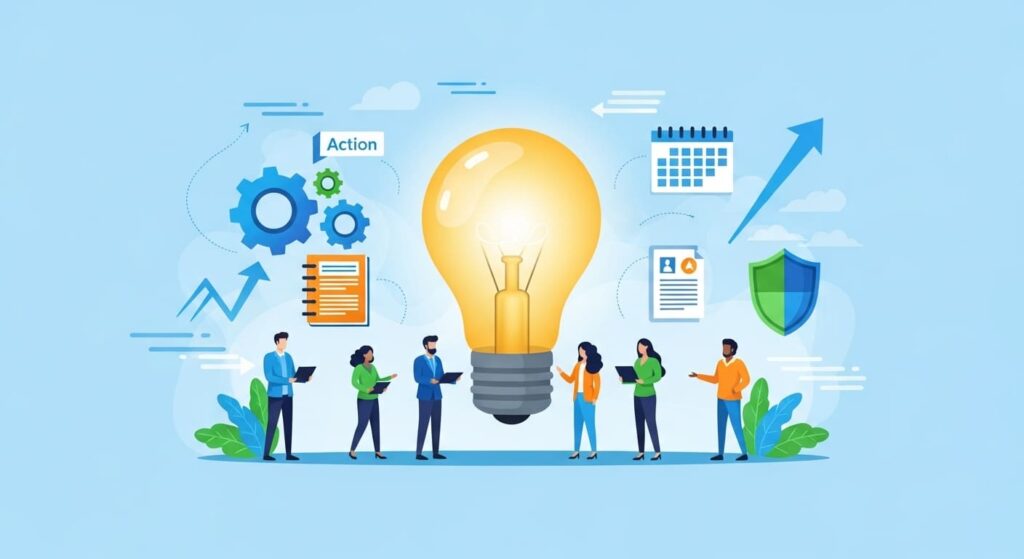
If you’re convinced stormuring could benefit your project, here’s how to begin:
- Start Small
Pick one product, team, or initiative to experiment with stormuring. Don’t rewrite your entire organization at once. - Set Clear but Flexible Goals
Define what success might look like, but allow the path to evolve. - Choose Rapid Feedback Loops
Short cycles (weekly, biweekly) ensure learning and adaptation. - Document Experiments
Keep a log of iterations, outcomes, lessons learned. - Allocate Buffer Time & Budget
Leave slack so you can respond to surprises. - Encourage Psychological Safety
Make failure or wrong turns part of the process—not a taboo. - Review Regularly
At set intervals, step back and assess whether you’re still on course.
Over time, you’ll build a culture of stormuring—one that treats uncertainty not as a curse but as a creative force.
Potential Variations and Hybrids
Stormuring doesn’t exist in a vacuum. It can blend with or morph into related approaches:
- Lean Stormuring: Emphasize extreme lightweight testing and waste avoidance.
- Agile Stormuring: Combine with agile software or project methods.
- Strategic Stormuring: Use at higher levels—vision, portfolio, long-range planning.
- Crisis Stormuring: An emergency-oriented version, focused on fast recovery and adaptation when things go wrong.
These variations let you tailor stormuring to context and resources.
The Future of Stormuring

As change accelerates—driven by technology, climate, geopolitics, and shifting demographics—the value of stormuring is likely to grow.
- Automation & Data: More feedback channels and predictive tools will sharpen stormuring cycles.
- Distributed Teams: Remote and global teams demand adaptive collaboration—stormuring fits well.
- Cross-Sector Integration: Stormuring may bridge domains—product, policy, sustainability—into unified adaptive systems.
- Resilience Focus: In a world of frequent shocks (pandemics, supply chain disruptions, climate events), stormuring may become a standard mindset.
In other words, stormuring may shift from being an optional innovation tactic to a core strategic competency.
Conclusion
Stormuring offers a powerful way to navigate uncertain terrain—not by resisting change, but by embracing it. It’s about generating ideas, refining them through iteration, fortifying them against disruption, and staying agile throughout. While not a silver bullet, it offers a framework to stay relevant and resilient in a shifting world.
If you’re willing to experiment, engage your team, and accept that failure is part of the path, stormuring may become one of your most valuable tools. Whether in business, community work, creative effort, or governance, stormuring can help you survive — and thrive — through the storms ahead.