Introduction
When conflicts arise between individuals, organizations, or institutions, people often look for a fair, impartial authority to listen to their concerns and help resolve disputes. This is where Ombudsmänner come into the picture. The concept of an Ombudsman (singular) or Ombudsmänner (plural) has been deeply rooted in history but continues to grow in relevance today, especially in democratic societies where accountability and transparency are essential.
This article explores the meaning, duties, history, and modern-day applications of Ombudsmänner, making it easier to understand why their presence is so crucial in protecting rights, promoting fairness, and strengthening trust between citizens and organizations.
What Does “Ombudsmänner” Mean?
The word “Ombudsman” originates from Sweden and dates back to the early 19th century. It literally means “representative” or “agent” of the people. The plural form, Ombudsmänner, is commonly used in German-speaking contexts to describe multiple individuals serving in this role.
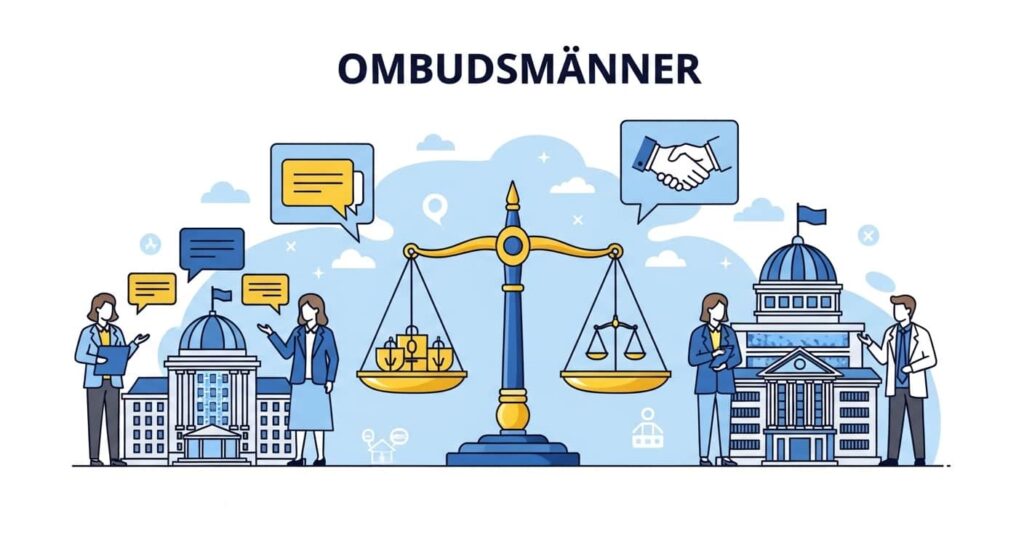
In essence, Ombudsmänner are independent officials or representatives appointed to investigate complaints, mediate disputes, and safeguard the rights of individuals against unfair treatment by institutions, whether public or private.
Unlike courts, Ombudsmänner provide a less formal, accessible, and often quicker path for resolving conflicts. Their impartiality is key: they are not advocates for one side but act as mediators to ensure fairness.
The Historical Roots of Ombudsmänner
The idea of Ombudsmänner first took shape in Sweden in 1809, when the Swedish Parliament appointed the first Justitieombudsman. His role was to supervise public officials and ensure that laws were followed correctly. This model became so effective that other countries gradually adopted similar systems.
- Scandinavia: Finland, Denmark, and Norway soon introduced Ombudsmänner in their own governance structures.
- Europe: By the mid-20th century, several European nations had established their own offices of Ombudsmänner to handle citizens’ grievances.
- Global Spread: Today, more than 120 countries worldwide have institutions where Ombudsmänner play a role in strengthening public trust.
This expansion proves how valuable Ombudsmänner are in balancing power between institutions and citizens.
Core Functions of Ombudsmänner
While the exact duties of Ombudsmänner can vary depending on the country or institution, some functions remain universal.
1. Handling Complaints
Ombudsmänner receive complaints from individuals who feel they have been treated unfairly. These complaints may involve government agencies, corporations, universities, healthcare institutions, or other organizations.
2. Investigating Fairness
After receiving a complaint, Ombudsmänner conduct independent investigations. They review documents, interview parties, and gather evidence to determine whether the complaint is valid.
3. Mediating Disputes
Rather than escalating issues to lengthy legal battles, Ombudsmänner often use mediation to find mutually acceptable solutions. Their neutral stance allows them to bridge gaps between parties.
4. Ensuring Accountability
By holding organizations accountable, Ombudsmänner reduce the likelihood of misconduct. Their presence promotes ethical standards and prevents abuse of power.
5. Recommending Reforms
In addition to resolving individual cases, Ombudsmänner may propose systemic changes. Their reports often highlight flaws in procedures or laws, leading to long-term improvements.
Types of Ombudsmänner
Ombudsmänner serve in a wide range of settings. Depending on the sector, their focus and responsibilities differ.
Public Ombudsmänner
These are the most traditional form, often appointed by governments. They oversee complaints against public officials, police, tax authorities, or municipal bodies.
Corporate Ombudsmänner
Many large companies appoint Ombudsmänner to handle internal employee complaints or customer grievances. For example, in the banking or insurance industry, Ombudsmänner act as trusted mediators for dissatisfied clients.
Educational Ombudsmänner
Universities often have Ombudsmänner to ensure fair treatment of students, faculty, and staff. Issues like grading disputes, harassment complaints, or administrative problems fall under their oversight.
Healthcare Ombudsmänner
In hospitals and healthcare systems, Ombudsmänner address patient complaints, ensuring transparency and accountability in sensitive medical matters.
Why Are Ombudsmänner Important?
The role of Ombudsmänner goes beyond dispute resolution. They embody fairness and accountability in societies where trust in institutions is often questioned. Here’s why their existence is vital:
- Accessibility – Unlike courts, Ombudsmänner offer an approachable and affordable way for people to raise concerns.
- Neutrality – Their independence ensures impartial judgment.
- Efficiency – Disputes handled by Ombudsmänner are often resolved faster than lengthy court cases.
- Prevention of Corruption – By monitoring institutions, Ombudsmänner act as safeguards against misuse of power.
- Public Trust – Citizens feel more confident in systems that provide independent oversight.
Challenges Faced by Ombudsmänner
Despite their importance, Ombudsmänner often face difficulties that limit their effectiveness.
- Limited Authority – In some countries, their recommendations are not legally binding.
- Resource Constraints – Lack of funding and staff can restrict their ability to handle large volumes of complaints.
- Political Pressure – In politically sensitive cases, Ombudsmänner may face resistance from powerful actors.
- Awareness Gaps – Many people are unaware that Ombudsmänner exist, which reduces the number of cases that could be resolved.
These challenges highlight the need for stronger frameworks that support Ombudsmänner in fulfilling their role.
Ombudsmänner and Modern Governance
As governance becomes more complex, Ombudsmänner play a crucial role in maintaining checks and balances. Citizens increasingly demand transparency and accountability, and Ombudsmänner provide a mechanism to meet these expectations.
- Digital Age Adaptation: Many Ombudsmänner now use online complaint portals, making their services more accessible.
- Human Rights Focus: In countries with fragile democracies, Ombudsmänner serve as protectors of human rights.
- Corporate Ethics: Businesses face growing scrutiny, and Ombudsmänner in corporate settings ensure ethical practices.
The Future of Ombudsmänner
Looking ahead, Ombudsmänner are likely to become even more important. Rising public demand for transparency, ethical governance, and human rights protection ensures their role will expand.
Some potential future trends include:
- Increased Legal Powers – Giving Ombudsmänner binding authority could make their role more impactful.
- Greater Public Awareness – Education campaigns can help people understand and use Ombudsmänner services more effectively.
- International Cooperation – Global networks of Ombudsmänner are forming to share best practices.
- Technology Integration – Artificial intelligence and digital platforms may streamline complaint handling.
Key Qualities of Effective Ombudsmänner
To fulfill their role successfully, Ombudsmänner must embody certain traits:
- Impartiality – Treat all parties equally without bias.
- Integrity – Uphold ethical values and resist external pressures.
- Communication Skills – Listen actively, explain findings clearly, and mediate effectively.
- Persistence – Investigate cases thoroughly despite obstacles.
- Empathy – Understand the concerns of individuals while remaining fair.
These qualities ensure that Ombudsmänner maintain credibility and public trust.
Conclusion
Ombudsmänner are more than just mediators of disputes; they are guardians of fairness, transparency, and accountability in modern society. From their origins in Sweden to their presence in more than 120 countries today, Ombudsmänner have proven indispensable in bridging the gap between citizens and institutions.
Despite challenges like limited authority or political resistance, their influence continues to grow. With rising demands for ethical governance and human rights protection, Ombudsmänner are set to play an even greater role in shaping fairer systems worldwide.
In a world where trust in institutions is often shaken, Ombudsmänner stand as beacons of neutrality and justice. Their work reminds us that fairness is not just a principle—it is a practice that must be defended every day.